
Constipation is characterized by difficult and / or infrequent bowel movements (BM). It is classically attributed to insufficient dietary fiber and water, although many people ingest staggering quantities of both yet still struggle to have a BM. Dietary triggers can be a factor (for me it's any type cow's milk, and eliminating it made a HUGE difference). A sedentary lifestyle as well as aging (which often co-exist) are also commonly cited culprits; yet this is not consistently accurate. Certain medications, especially opioids, predictably cause constipation. Sometimes in both children and adults a mass of hard stool can remain lodged further up in the colon, even in the presence of regular BM. This is typically identified with palpation, X-ray, CT scan, or ultrasound. Stress can play a role in constipation, as can an aversion to using public restrooms. The duration of constipation may range from being temporary & sporadic to constant & life-long. I recall years of getting the medical history on patients who, when specifically asked, would say, "I have been constipated my whole life." Severity also ranges from annoying to life-threatening. While problematic itself, constipation can also be a factor in other issues such as hemorrhoids, pelvic organ prolapse, weight control, malabsorption, elevated blood sugar & blood pressure, nausea & vomiting, back & leg pain, and urinary issues (including bedwetting) as the stool can exert pressure on the bladder.
Current Treatments
Sufficient fiber and water are essential. But when this isn't enough many reach for over-the-counter agents such as:
- Stool softeners – these work by different actions to soften hard stool and promote passage. Emollient softeners (Colace, Ducolax Stool Softener) act to soften the hardened stool and typically work within 12 – 72 hours. Osmotic softeners (MiraLAX) draw water into the colon taking 1-3 days to work and may cause less cramping. Phillips Milk of Magnesia, another osmotic softener using a different active ingredient, can work in 30 minutes – 6 hours. Metamucil is a popular, over-the-counter bulk-forming fiber supplement that works to soften stool with psyllium husk, a natural soluble fiber.
- Stimulant laxatives – these trigger contraction of intestinal muscles to push stool out. Popular brands include Dulcolax and Fleet, which contain bisacodyl. Other stimulants have senna, a plant-based stimulant used in Ex-lax and Senekot. There are oral tablets and suppositories, and these may cause cramping and sudden urgency.
- Combination formulas - are both stool softeners and laxatives, such as Colace 2-IN-1, Senokot-S, and Peri-Colace. Enemas involving the injection of liquid into the rectum to soften stool and stimulate the colon can also be classified here.
While often helpful for promoting BM, these measures have several downfalls:
- They can be burdensome in terms of finances, life-style adaptation, and emotions, especially for parents & children as well as for elderly adults & their caregivers.
- They address symptoms and do nothing to solve the cause of the constipation.

A Better Way
Typically the different types of fascia are not considered as a potential influence on constipation: BIG mistake! The superficial fascia (SF), embedded in the hypodermis (area below the skin and above the deep fascia), is loaded with nerves from the autonomic nervous system (ANS). These nerves have fight / flight (sympathetic) as well as rest / digest (parasympathetic) fibers that relate to digestion. The deep fascia (DF) directly contacts the digestive organs and has different compositions. Portions of the DF are thin, tightly encase the organs, and are innervated by the ANS. Other portions of the DF are thicker and connect the organs of digestion to each other so they can work cohesively. This DF also connects the organs to the trunk wall so they don't migrate, holding them in place as we move. Digestive organs are located more toward the front half of the trunk, meaning their DF attachments to the trunk wall are found in the abdomen. These attachment points are fairly precise and relatively consistent from person to person, creating a roadmap of points to assess and address in the abdomen that may impact constipation. Because the fascia of the trunk is continuous into the lower limbs (legs), this DF must also be considered.
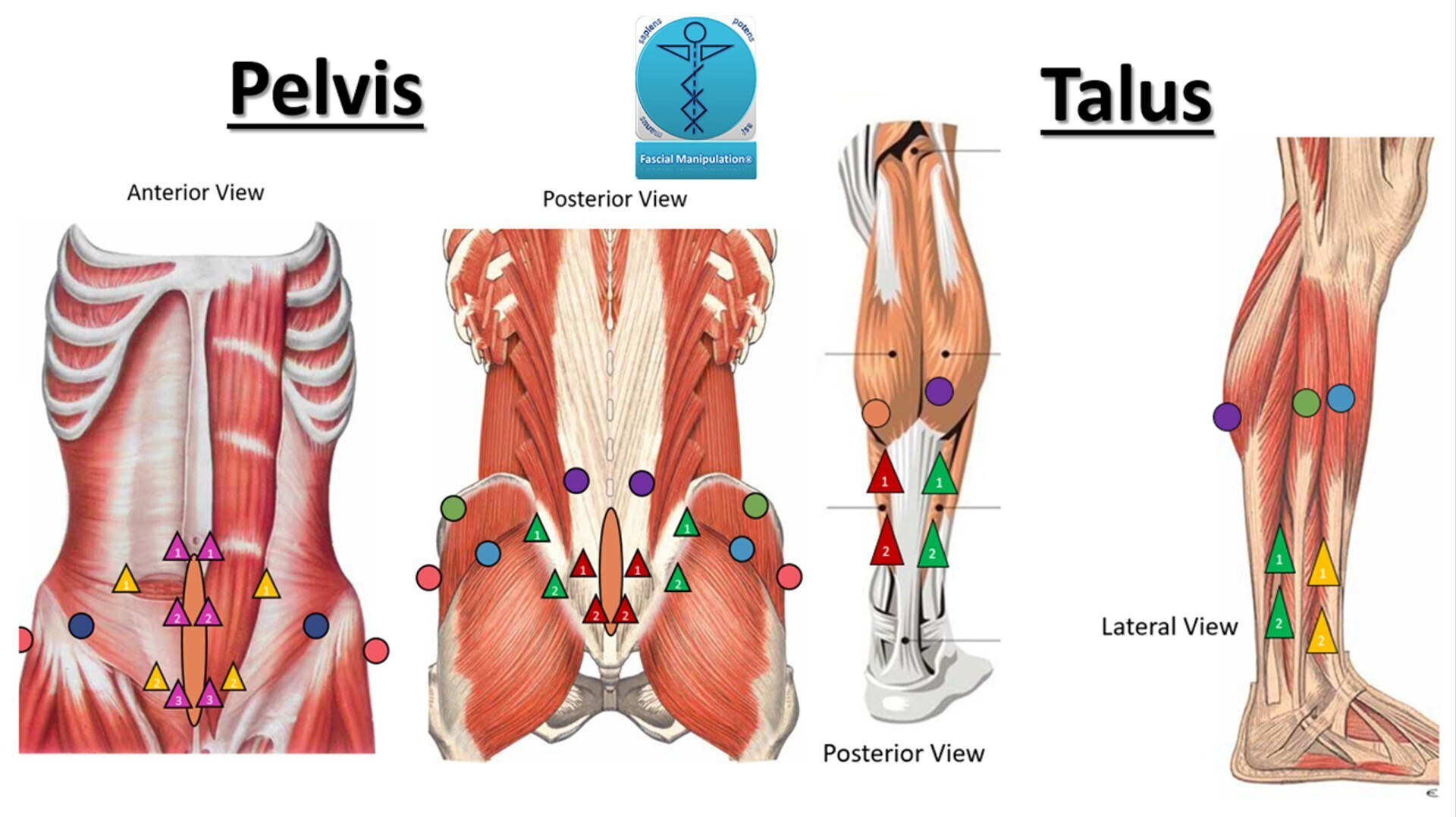
Finding & Treating Fascial Dysfunction
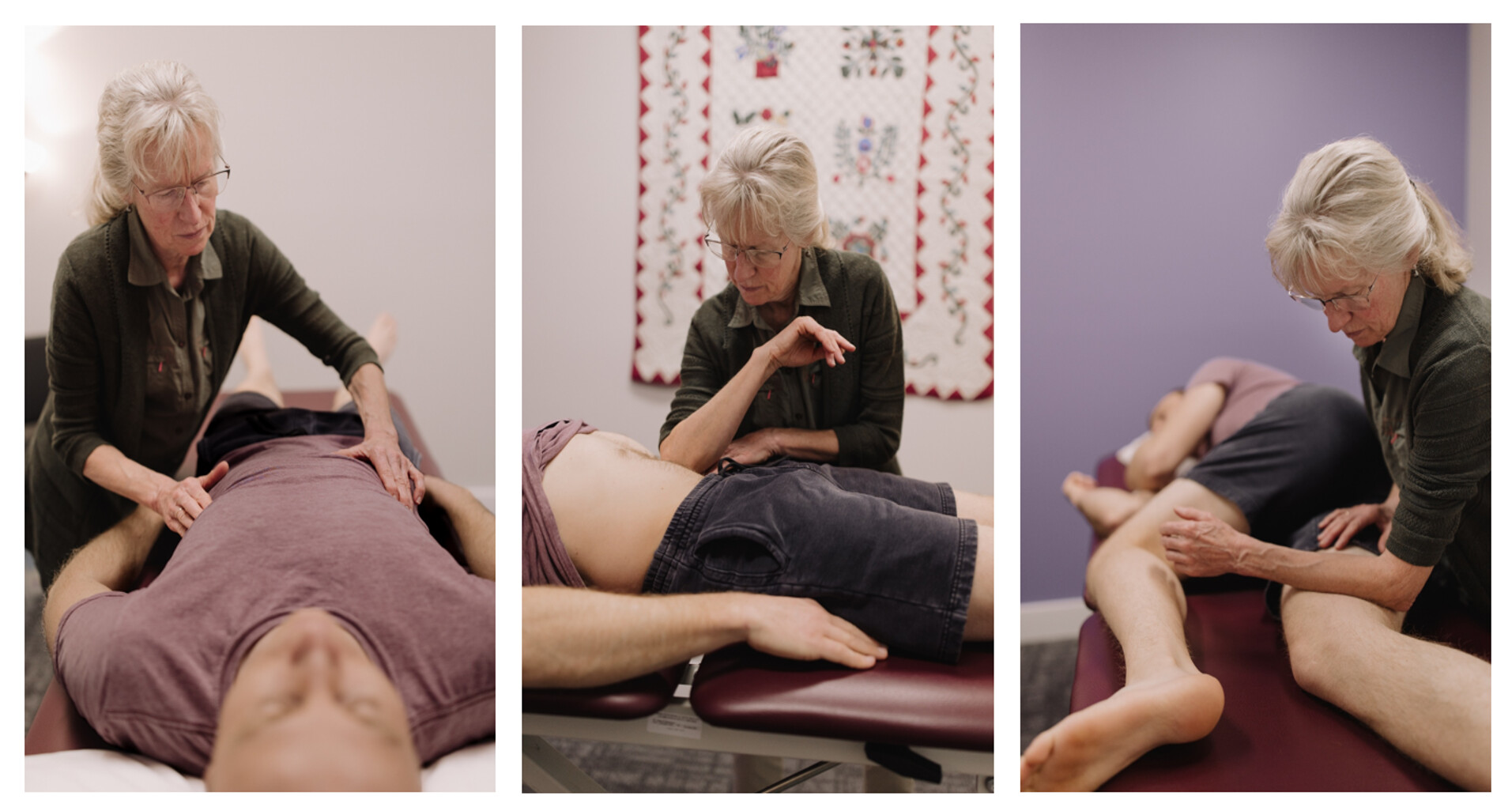
Palpation is key for identifying fascial dysfunction in the SF and DF, known as fascial densifications. Assessment of the SF is done with a flat hand and pincer grasp, searching for thickened, painful tissue. Assessment of the DF involves vertical compression at precise points searching for dysfunctional firmness and hardness, as opposed to the tissue being soft and compressible. Next, application of a horizontal shear force using a knuckle or elbow on specific points can identify grittiness or crunchiness in the DF layers – like sandpaper as compared to glass. We don't have to assess the whole body, but look only at precise points that relate to the organs as well as into the lower limbs. Typically we can find a relationship or similar tissue line that is dysfunctional in the DF of the trunk and lower limbs. We then work manually to abolish fascial densifications and restore softness and slide in the DF layers. This in turn removes tension and compression on the organs, freeing them to function more normally. Dysfunction in the SF is treated with the hand differently, and I often also use cupping (for more on this you can read my cupping post). Fascial densifications in the SF and DF result from tissue overload which stems from trauma, repetitive use, or immobilization. Constipation is frequently not a problem with the colon, stomach, or other organs of digestion, but is more often a reflection of a faulty fascial environment influencing these organs. Restoration of the proper environment enables the organs as well as the ANS to function more normally. Aspects of nutrition, activity, and stress must be assessed and addressed as needed.
If you or a loved one is recurrently battling constipation, please consider these often overlooked constructs. To learn more about how attention to fascia may help constipation you can read additional information on my website, book a time to talk with me, or schedule a consultation. You have options: act on them!
Wishing You Health & Joy!
Colleen


.jpg)
