What is Cupping?
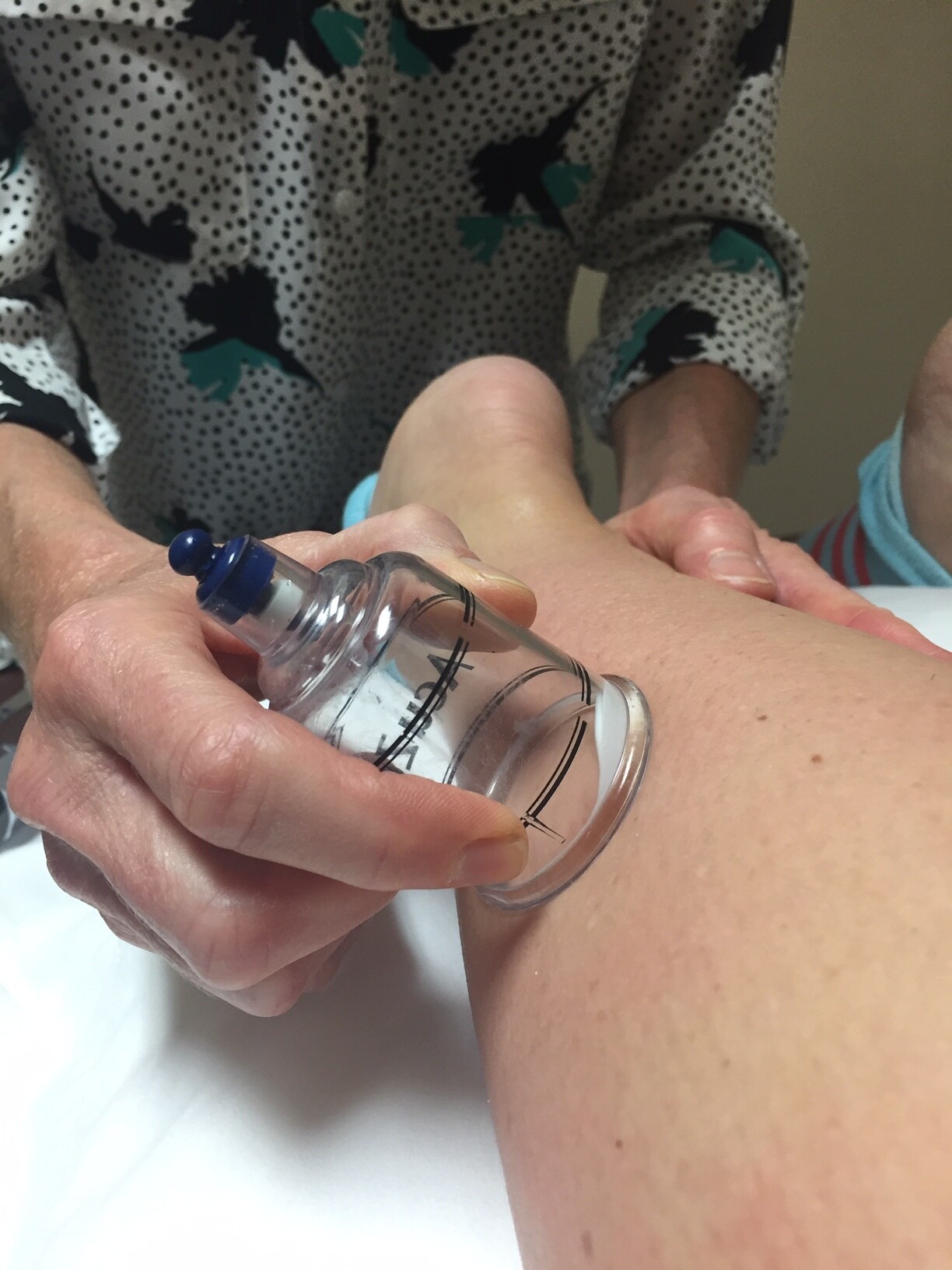
Cupping therapy has been around for centuries, and is used by a variety of practitioners all over the world. It involves the application of a suction force to the skin to create a vacuum effect on the tissues below. Negative pressure is created inside cups by using fire (glass cups), compression (silicone cups), or a suction pump (plastic cups) which pull the skin and underlying soft tissues into the cup. How much is pulled depends on the intensity of the suction applied. The cups are then either left in place (more common) or moved around (more intense / effective – this is my preferred method using plastic cups).
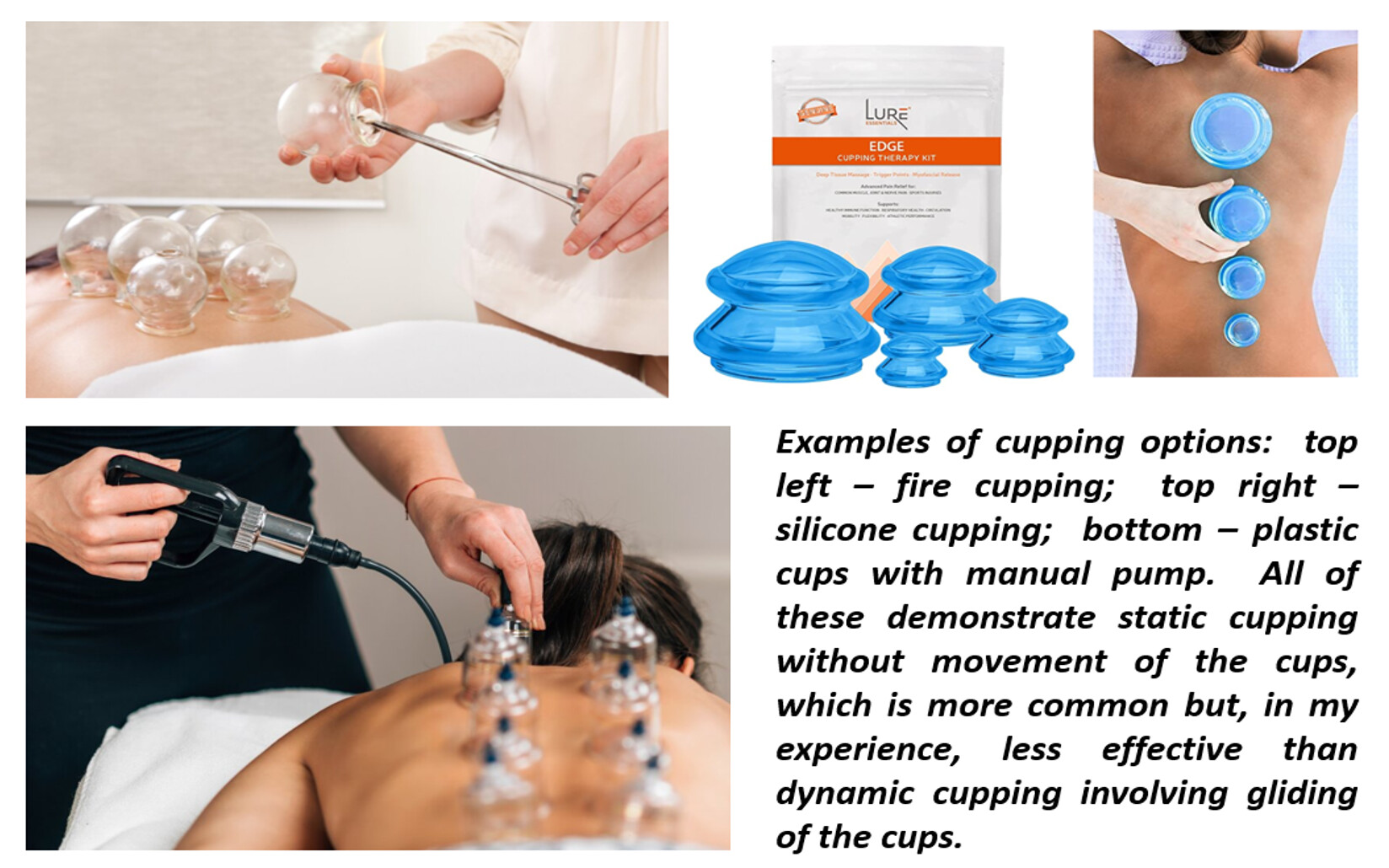
What Does Cupping Do?
Stimulating blood flow to a region is one effect attributed to cupping, as well as releasing muscle tension. I would argue that cupping is not as impactful on deep tissues like muscles, and there are better ways to accomplish muscle relaxation. Furthermore, while circulation is impacted it's not the only factor. I believe the main benefit of cupping relates to breaking up elements that are adhered in the hypodermis, which is the area below the skin but above the muscle and deep fascia. This corridor has the superficial fascia (SF) layers running through it. Thickening of tissues and loss of slide between layers can negatively impact nerves, sweat & oil glands, arteries & veins, fat storage, and lymphatic vessels as they travel toward the skin and pass through the layers. These structures relate strongly to the autonomic nervous system (ANS), which controls all involuntary functions of our bodies keeping us alive and well. ANS and hypodermis dysfunction can manifest as problems with blood pressure, sweating, dry / oily skin, lymphedema, rashes, acne, spider / varicose veins, arteriole mottling, skin discoloration, pain, constipation / diarrhea, menstrual disorders, fat deposits, and more. Excessive / abnormal fat deposits and cellulite can occur anywhere, but commonly appear in the hips, upper arms, inside part of the knees, and torso.
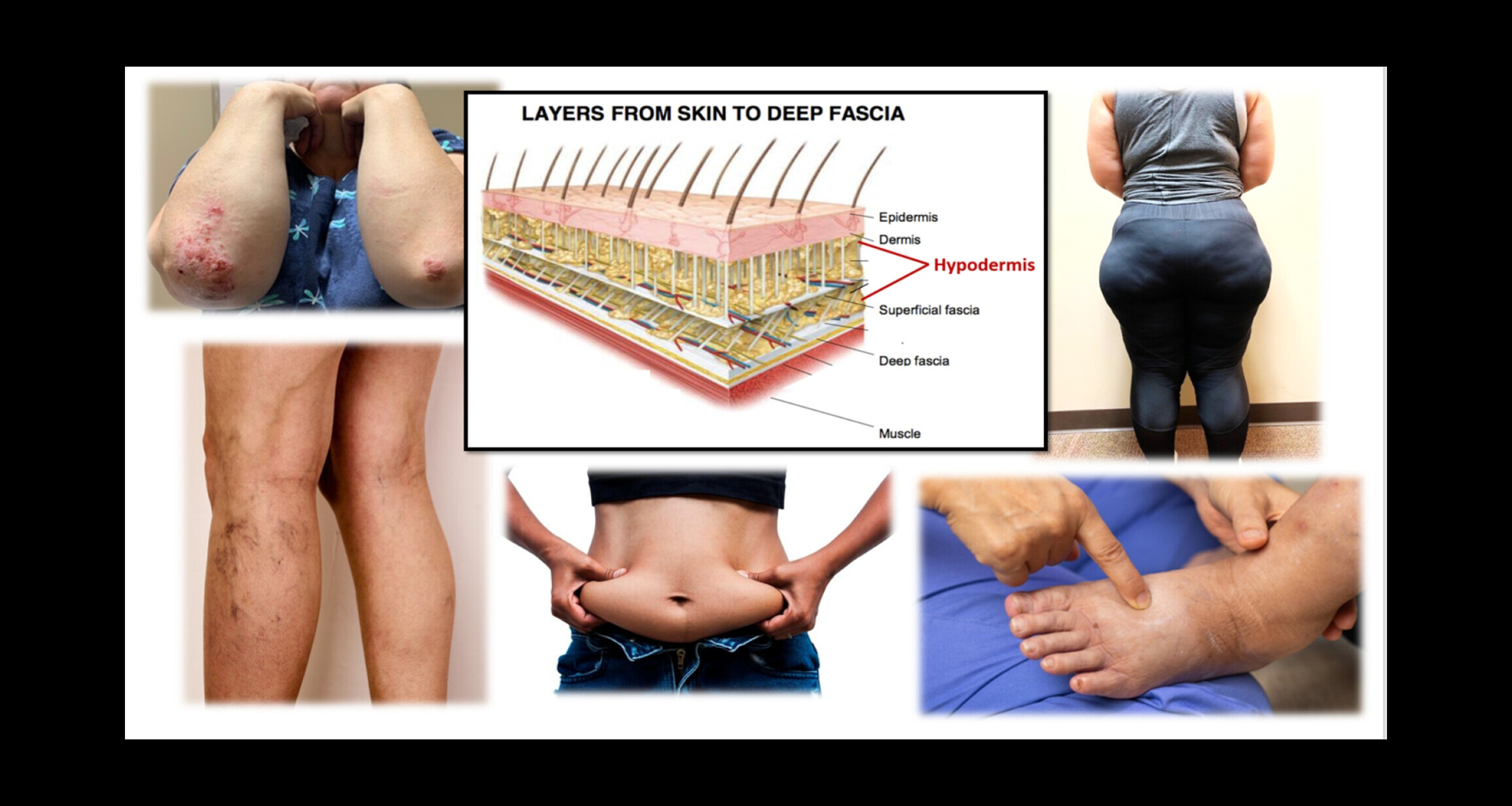 The layers of the hypodermis are pictured in the center, surrounded by some examples of how dysfunction involving the hypodermis may appear.
When & Where Is Cupping Indicated?
Cupping is potentially helpful when there is dysfunction in the hypodermis, which can occur in response to trauma, overuse, repetitive movements, or immobilization. It can also develop over time in the presence of deep fascia densifications that remain unresolved. Problems stemming from hypodermis dysfunction can sometimes be visible as mentioned above, but also felt by palpation from a skilled clinician who knows how to feel for thickness and pain stemming from the hypodermis. This can be done with an open hand feeling for alteration of the tissues, as well as with a pincer grasp feeling for thickening. Dysfunctional tissue will also be painful with a pincer grasp, unlike normal tissue. Consider that when side lying aggravates the shoulder or hip it may be a sign that the hypodermis is problematic. Cupping directly to the site of dysfunction is not always appropriate, as with skin rashes or varicose veins. Sometimes the visible problem stems from a remote source; sometimes the source is deep fascia dysfunction which is not as responsive to cupping. Cupping should not be used like a "shot in the dark" when other interventions don't work; there are anatomically and physiologically sound ways to determine if cupping may help.
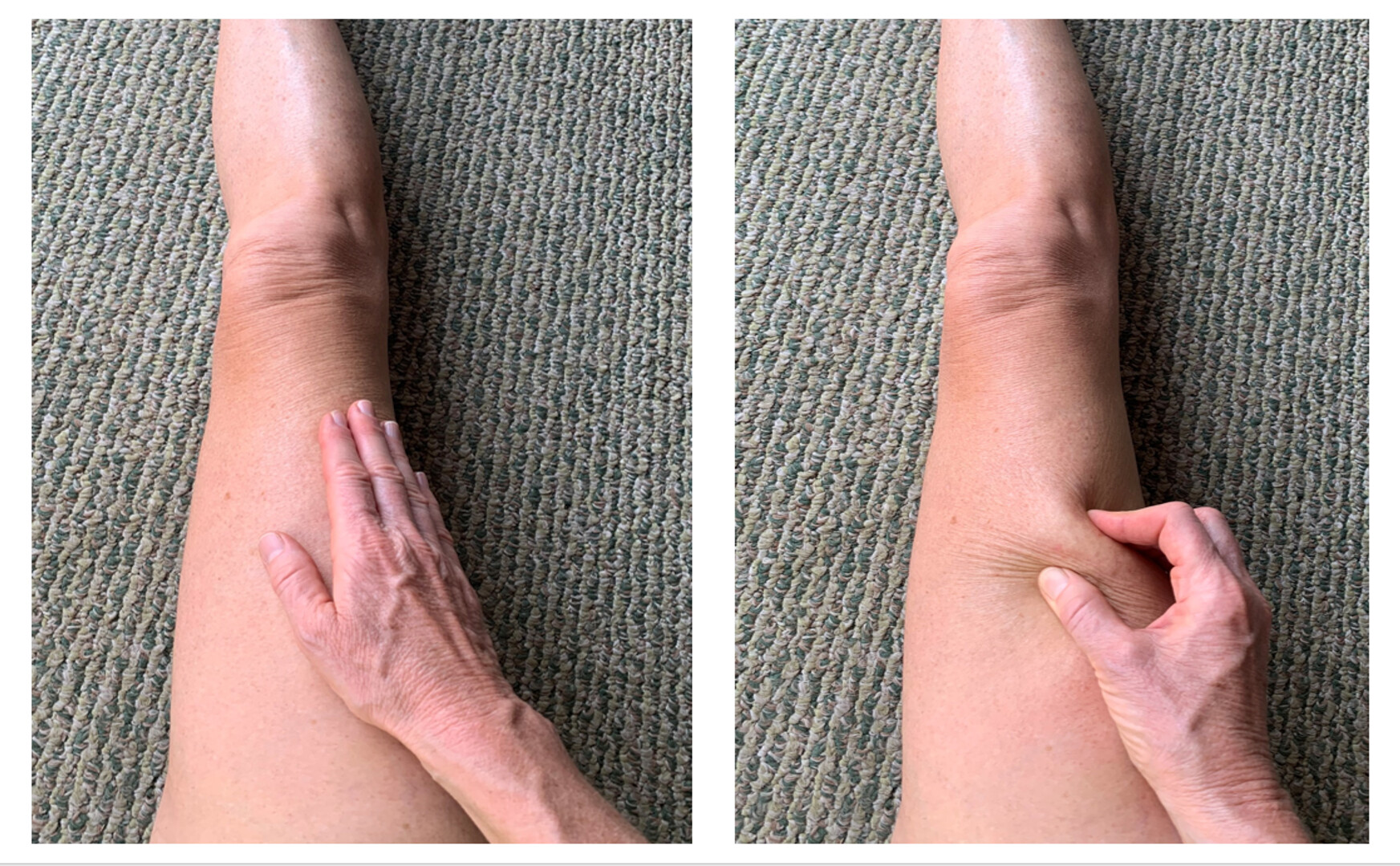 Palpation with an open hand and pincer grasp performed by a skilled clinician can determine if dysfunction of the hypodermis is present, and if cupping may be beneficial.
How Is Cupping Used?
Many people equate cupping with the presence of a circular bruise, which is indicative of high level of suction with the cups left in place, known as static cupping. Some call this "The Badge of Honor," implying that cupping without this telltale mark is ineffective. Much of what is demonstrated with internet videos and pictures reflects static cupping. In my experience, it is much more effective to utilize dynamic cupping that involves using a lubricant to glide 1-3 cups in an area. I also find that leaving a bruise is not essential nor beneficial to healing, and I actually try to avoid bruising. Since cupping involves pulling on nerves trapped in dysfunctional, thickened tissue it can be painful. There is a fine line to walk between tolerable yet effective; I try to apply the minimal amount of suction needed to break up the adhered tissues, and use the largest cup with which I can maintain suction. There really are not rigid guidelines on how long or how often one can cup. When appropriate, I have many of the people I work with get a cupping kit for home use and teach them how and where to use it. It's not for everyone, nor is it for every problem. For more on the actual technique you can watch the video below.
Are you wondering whether you or someone you know have issues that might benefit from cupping? Please consider reaching out to me by email, text, or phone. You can also schedule an Exploratory Session or Initial Consultation with me by going to my website. You have options – act on them!
Wishing You Health & Joy!
Colleen
Colleen Whiteford
Contact Me