Eventually everyone needs some healthcare help. Finding the right person to aid in navigating the slippery slope (some would say quagmire) of healthcare is daunting. Consider these pointers, and if you are searching for a Fascial Manipulation® - Stecco provider see the link at the end.
Define Your Priorities
Consider these elements and what's important to you:
Profession – what issue(s) are prompting your search? Sometimes the best person to assist can be straightforward, like an orthopedist for a broken bone or an allergist for allergies. But often there are multiple practitioners who address the same issues with different approaches, making it hard to know where to turn. For example, back pain may be treated by a physical therapist, chiropractor, massage therapist, acupuncturist, athletic trainer, physician, physician assistant, nurse practitioner, and more. Read on for more direction with this.
Specialty – if you are comfortable with utilizing medications, injections, multiple tests, and surgery then it's logical to seek a practitioner who utilizes these interventions. But if that's not your inclination then it makes sense to consult a provider who will help you explore options - and there are lots of options! Fascial Manipulation® - Stecco (FM), Rolfing, Graston, Instrument Assisted Soft Tissue Mobilization (IASTM), various forms of massage, cupping, foam rolling, acupressure, exercise, yoga, fascial counter-strain, strain/counter-strain, joint manipulation, dry needling, acupuncture, and more. No one technique works for everyone, every problem, every time. Good clinicians often have multiple approaches and interventions, but tend to migrate toward a few they've found to work best. These become fundamental to their practice model, and resources are directed into mastering them. At the top of my list is the FM method. The approach that's right for you is an individual choice based on multiple factors.
Finances – perhaps working with a provider who accepts insurance is a high priority for you. But if you are open to considering providers who may not bill your insurance then you will absolutely have additional options.
Location – are you willing and able to drive a bit for the right person, or is proximity a priority? Again, flexibility opens up options.
Learn About the Provider
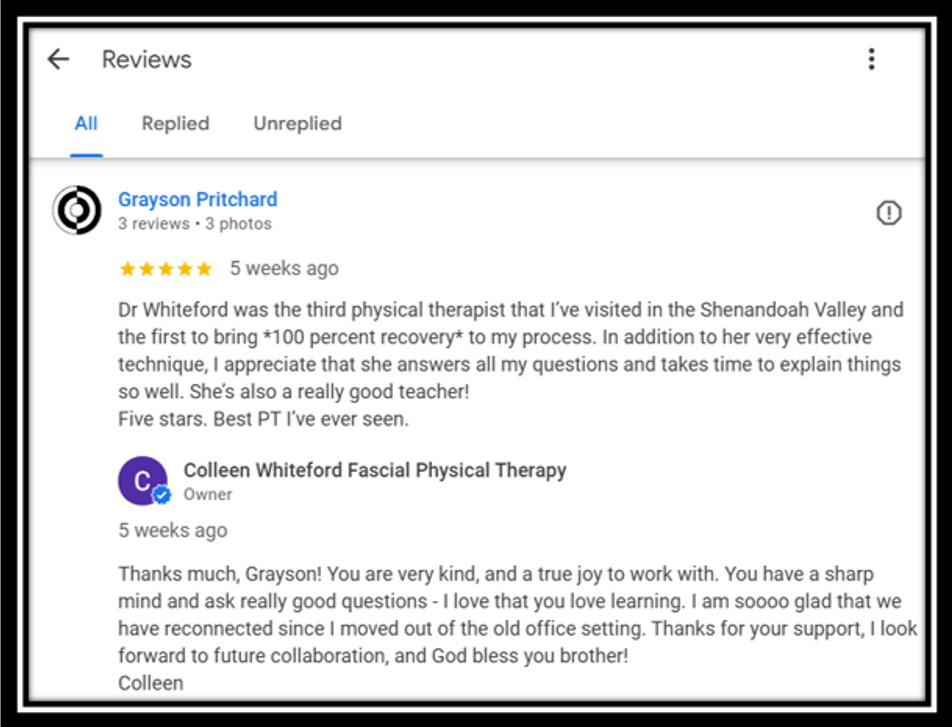
What have you heard about a particular provider? Word of mouth can be very powerful: it's absolutely my number one referral source. I often ask patients to leave me a google review as it has a broader reach beyond a patient's friends and family, and can be read by those searching the internet. Reading a provider's reviews can paint a nice picture of what others have experienced.
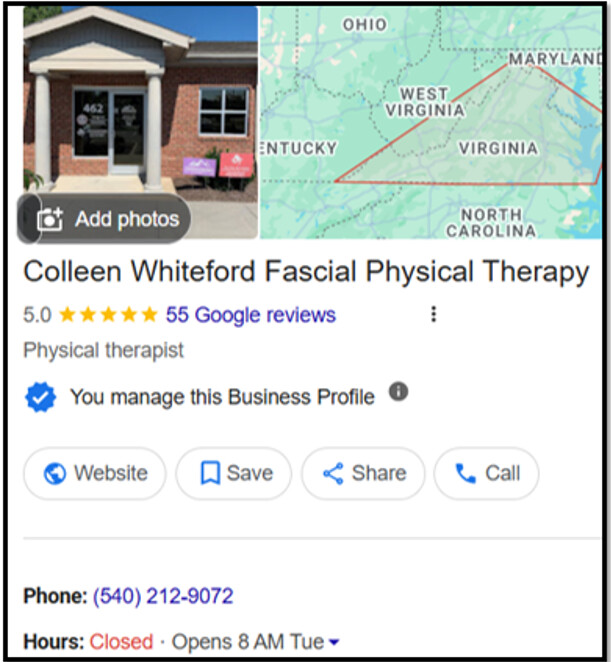
A provider's website should reveal insights about this person you are considering trusting with your care. If they don't have a website or it doesn't give you a better sense of them, then that may be telling you something. A listing of credentials and diagnoses treated can be impressive yet misleading. While there will certainly be similarities between professionals with identical credentials, there can also be drastic differences. Some of it may just come down to personality and who clicks with you. Admittedly it can be hard to know with absolute certainty what you're getting into. But with some research you can at least step into an encounter a bit more educated and prepared.
I believe good providers manifest these qualities:
- They listen and don't jump to conclusions.
- They use their brain, eyes, and hands regularly and frequently in assessment and treatment.
- They formulate a plausible hypothesis as to the root cause of problems and work to address it, as opposed to masking symptoms.
- They can detect problems early and intervene, possibly even preventing larger issues.
- They use evidence-informed approaches, yet are not afraid to explore and modify their paradigm.
- They are open-minded and embrace a life-long path of learning, well beyond licensure requirements.
- They are willing to give all they can to each patient, and are passionate about helping people recover and thrive.
When To Seek Help
Pain is a great motivator for seeking help. But sometimes there are other warning signs of trouble that manifest prior to pain. In my practice I often wish I could have intervened for someone sooner, as it can make recovery faster, fuller, and easier. Early intervention and even prevention can save time, money, pain, and the development of new issues. I believe that many health problems commonly encountered could be prevented or diminished if they were identified and addressed earlier and differently than they are in our current model. Rehabilitation of a total knee replacement is necessary, but I propose that we really should be preventing them.
Consider that it may be time to seek help when:
- A problem isn't improving, or gets better but then returns
- You have to modify daily activities to accommodate the issue
- You are losing mobility, stability, and / or strength
- You are utilizing measures to mask symptoms
- Problems keep compounding, with new issues developing
I hope this is helpful, and if you are interested in finding an FM clinician you can
Wishing You Health & Joy!
Colleen
Colleen Whiteford
Contact Me