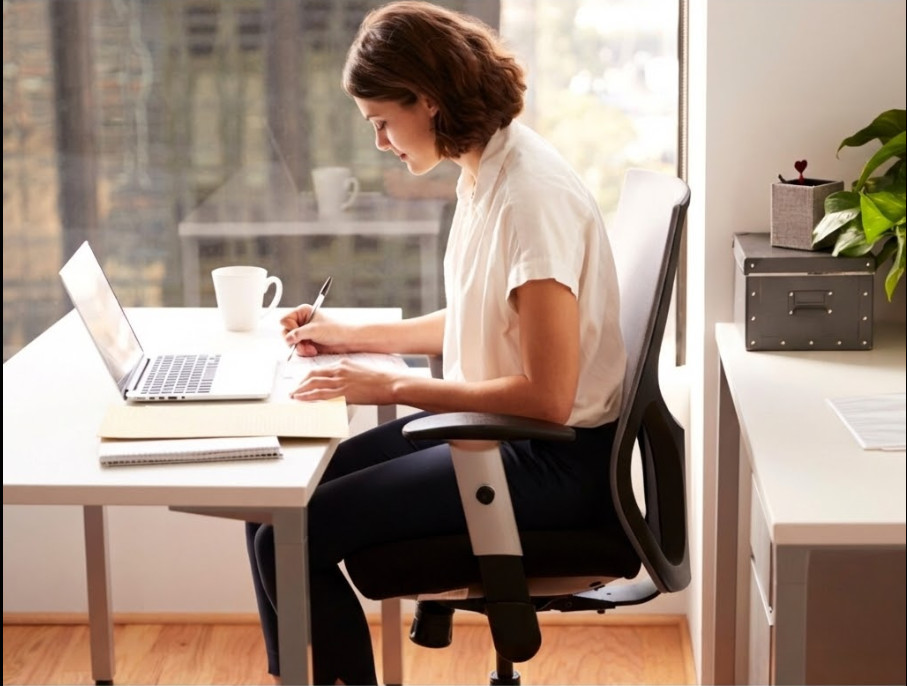

Connective tissue creep is the term for the deformation of the tissues under sustained loading. Studies show it begins in as little as 3 - 20 minutes of a sustained posture, resulting in stiffness and difficulty elongating shortened tissues. Over time if the same tissues are repeatedly shortened, they become more susceptible to creep, difficult to stretch, and can cause pain. In the case of sitting, that means creep is most influential at the front of the hip in the flexor mechanism (what makes it bend). That's why many people struggle with the first few steps after getting up from sitting - the tissues at the front of the hip won't "unsit." Frequent and prolonged sitting makes it increasingly difficult to elongate tissues and stand up straight quickly. Having said that, pain in other parts of the hip may stem from sitting on other tissues that are harboring their own issues, especially fascial densifications.
The hips are not the only consideration with prolonged sitting and creep. In any position our arms are often doing something in front of us, like driving, reading, holding an infant, operating machinery, or working on a computer. This subjects that same creep effect to the tissues in the front of the shoulders, chest, and upper back. Again, when we do it often the tissues on the front of our shoulders and head gradually shorten and keep us forward.
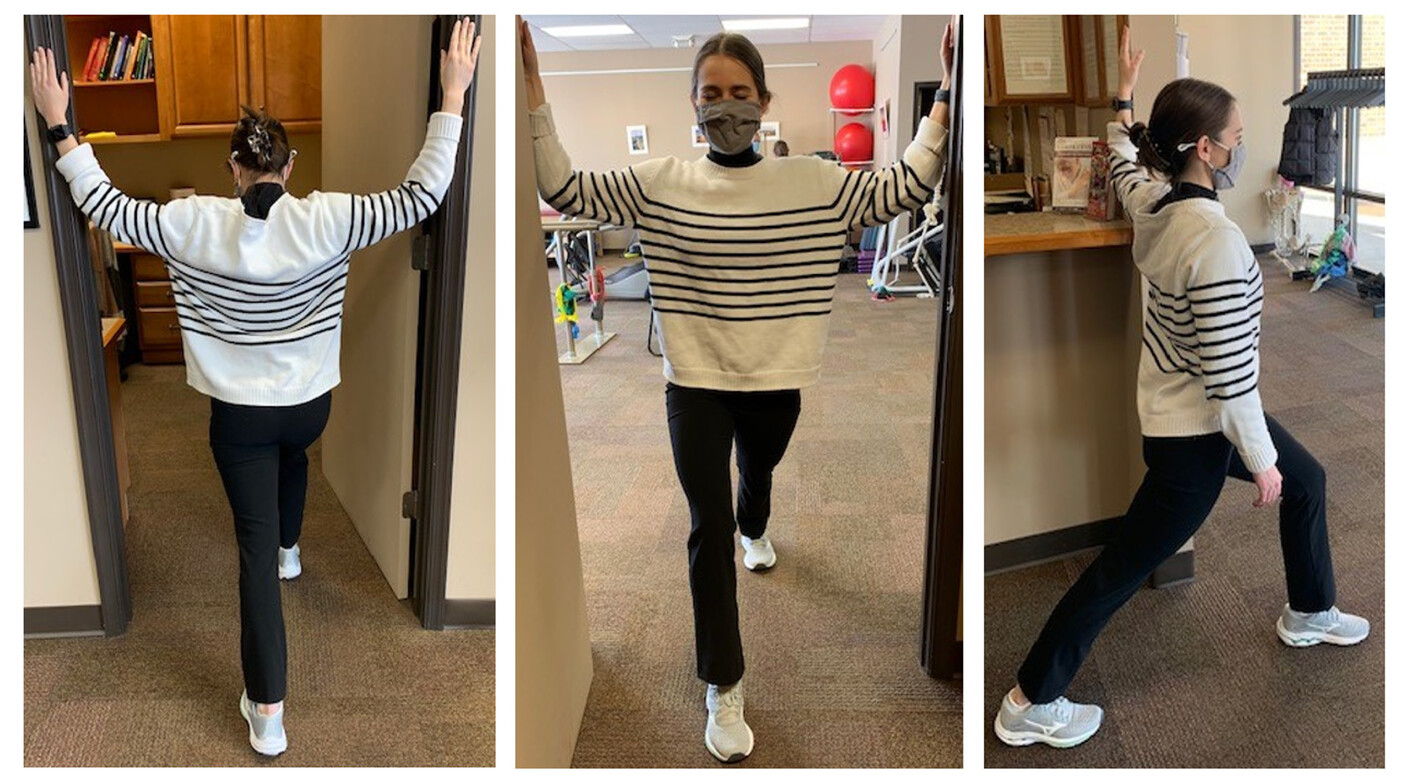
Reverse the Creep: Dooway Lunge
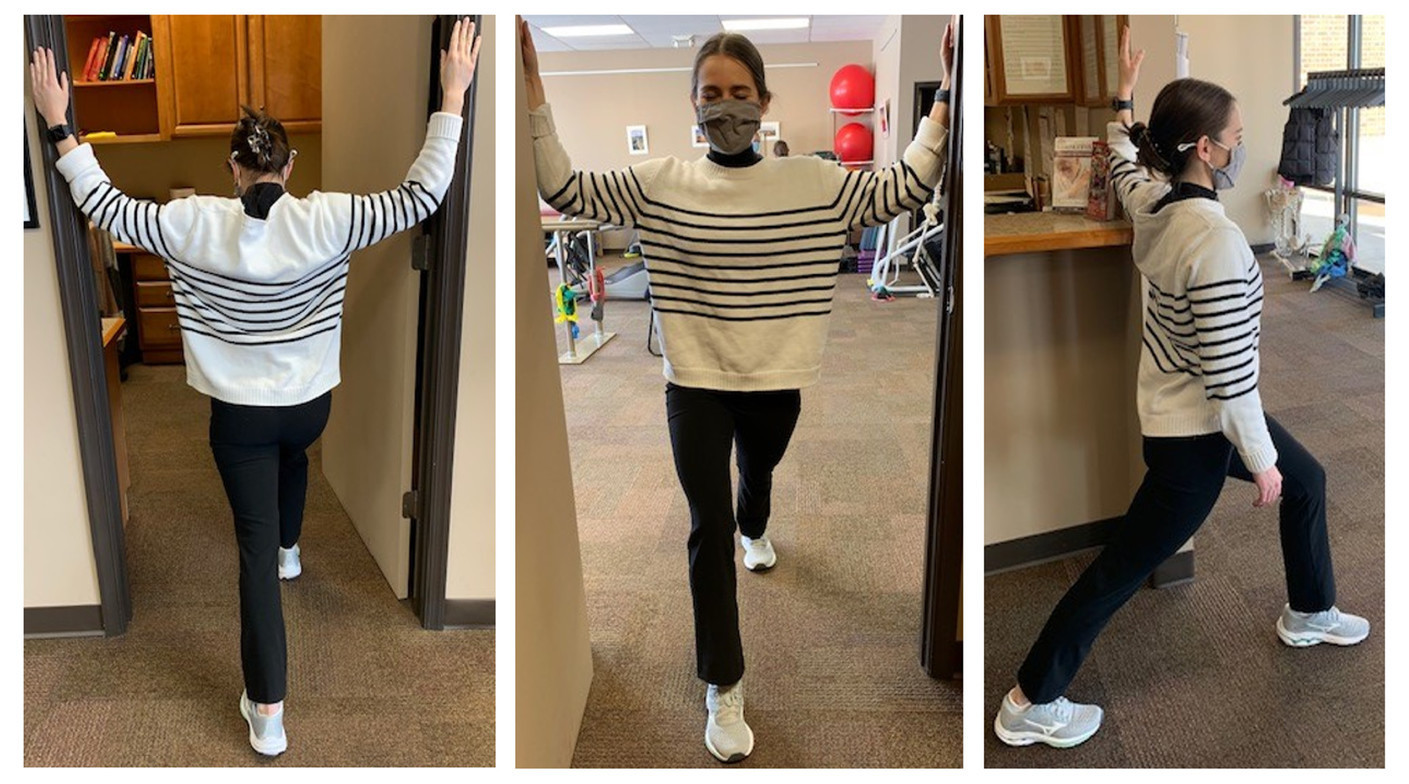
It's true that if you don't use it you lose it. So breaking up periods of sitting and opening up the front chest area are great ways to undo the effects of creep. I recommend the Doorway Lunge exercise for lots of people as a quick and easy all-in-one strategy. Here's how it goes:
- Target: Front of the hip (of the leg behind), the back of the calf (of the leg behind), and the front of the chest/shoulders. Be sure to keep the back heel down and toes pointing straight ahead, not turned out. Try to have the elbows at about shoulder height.
- Purpose: Counteract the effects of sitting, wearing heels, and arm use in front of us.
- Frequency: MULTIPLE times a day for those who sit a lot. For those who are more active at least once daily or more if possible.
- Duration/Reps: Hold for 1 minute each side. 1 rep each side may be enough, but no harm in doing more.
- Considerations: Restrictions in the calf, hip, or shoulder may limit how far you can lean through the doorway. You may need to accomodate a tighter region until it catches up with what the other regions can tolerate. Or there may be some impediment to you successfully performing this exercise, in which case I suggest you seek help. Listen to your body and don't push through pain - you may lose.
Get Creative
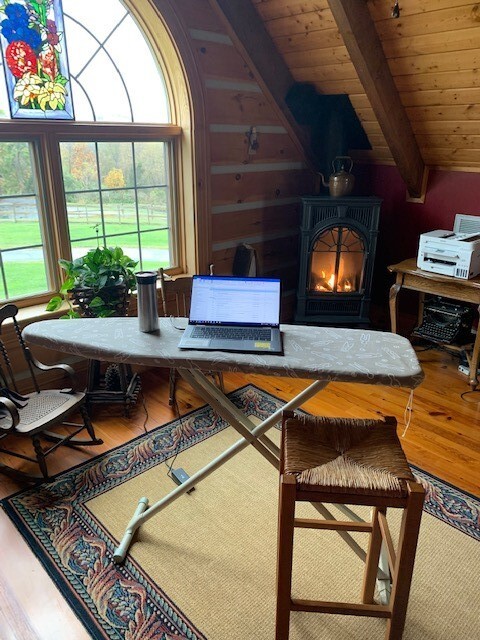
Look for ways to break up or limit sitting whenever you can. When I'm attending a course or conference I try to sit in the back or in an aisle seat as it gives me the freedom to stand as I wish. I also claim my seat but then don't sit down until I absolutely have to. On a commercial plane I stand up every 30 minutes and either stay at my seat or walk to the lavatory. On an airport bus or tram I choose a pole to hold onto while standing instead of sitting, especially if I've been or am going to be sitting a lot on a plane. When I'm working on my laptop at my office I typically stand more than sit. At home and on the computer I either use the high kitchen counter or my amazing adjustable sit / stand desk (see below).
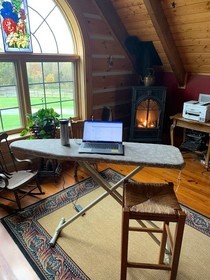
Maybe you're in a job that necessitates lots of sitting. I like to say change what you can and maybe what you can't change won't be as impactful. Little modifications can do big things when performed consistently over time. For those who sit a lot all day it's more crucial to be active at the end of the day as opposed to sitting and reading or watching TV. Maybe you have issues bigger than what these tips can address. To learn more about how fascial work may help your symptoms you can give me a call, send a text, book an exploratory session, or schedule a consult. You have options - act on them!
Wishing You Health & Joy!
Colleen
Colleen Whiteford
Contact Me